
Introduction
Artificial intelligence (AI) models have achieved remarkable success in predicting health outcomes using electronic health records (EHRs), multimodal biomedical data, and large-scale observational datasets. However, prediction alone is insufficient for clinical and public health decision-making. Healthcare requires understanding why outcomes occur, what would happen under alternative interventions, and which patients benefit most from specific treatments.
Causal inference provides the theoretical and methodological foundation to move from risk prediction to actionable intelligence. Emerging advances in causal AI integrate structural causal models, target trial emulation, counterfactual reasoning, and modern machine learning methods to estimate treatment effects, address confounding, and improve generalizability across diverse populations.
This collaborative workshop, organized by the AMIA Knowledge Discovery and Data Mining (KDDM) Working Group, will bring together researchers, clinicians, epidemiologists, and AI scientists to explore:
- Foundations of causal inference for health data
- Integration of causal modeling with machine learning and deep learning
- Causal discovery from EHR and multimodal data
- Generative AI for healthcare decision making
- Bias, transportability, and fairness in AI systems
- Real-world implementation and regulatory considerations
- Case studies demonstrating causal AI for precision health
The workshop will feature a keynote by Dr. Yi Guo, a leading expert in causal inference and causal AI using real-world data in medicine, invited talks from leading experts, poster presentations, and an interactive panel discussion on the future of causal AI in healthcare. By shifting the focus from black-box prediction to causal reasoning, this workshop aims to advance trustworthy, deployable AI systems that can directly inform interventions, clinical guidelines, and health policy.
Outline
This collaborative workshop is structured around a central theme: advancing healthcare AI from predictive modeling toward actionable causal intelligence. The program will begin with foundational perspectives on causal inference in health data, including structural causal models, counterfactual reasoning, and treatment effect estimation. The keynote will frame the emerging field of causal AI and highlight how integrating epidemiologic principles with modern machine learning can enable AI systems that inform interventions rather than merely predict outcomes. Then two invited talks will explore target trial emulation, heterogeneous treatment effect estimation, and causal machine learning approaches.
A dedicated session for poster presentations will highlight emerging scholarship and foster engagement across career stages. In the hands-on tutorial, we will begin by briefly surveying participants to identify the causal LLM use cases of greatest interest—whether etiologic modeling, differential diagnosis, or interventional decision-support scenarios—and immediately adapt one prepared, focused tutorial. The session will be hands-on and implementation-oriented, covering clinical-grade prompt design, retrieval-augmented generation (RAG), including GPT agent construction within ChatGPT, and structured, agile evaluation frameworks. We will demonstrate how to integrate generative models with causal and mechanistic reasoning to move from text generation toward actionable inference. On their laptops, participants using ChatGPT will build GPT-based agents to prototype causal decision-support and diagnostic tools; time permitting, we will also illustrate RAG pipelines and EHR integrations using n8n (an open-source, low-code workflow automation platform) and further harden clinician-facing input/output interfaces using Figma AI (an UI/UX design platform). The emphasis is on deployable architectures that connect large language models to structured health data, operationalize causal reasoning, and translate into trustworthy, real-world clinical systems. The workshop will conclude with an interactive panel discussion addressing bias, fairness, transportability, and regulatory considerations in deploying causal AI systems in healthcare. This narrative progression—from foundations to methods to implementation—ensures a cohesive and forward-looking discussion on how causal reasoning can strengthen trustworthiness, generalizability, and real-world impact of AI in health applications.
Objective
This collaborative workshop is designed for a broad and interdisciplinary audience interested in advancing the methodological rigor, trustworthiness, and real-world impact of AI in healthcare. The intended audience includes biomedical informaticians, clinical researchers, epidemiologists, biostatisticians, machine learning scientists, health data scientists, and clinician–investigators who are developing or deploying AI models using electronic health records (EHRs), claims data, registries, genomics, and multimodal health data. The workshop will also be valuable for health system leaders, implementation scientists, and policymakers who seek to understand how causal inference can strengthen decision-making beyond traditional predictive modeling. Given the rapidly growing interest in trustworthy and actionable AI, we anticipate a diverse range of expertise among participants. Approximately 25% of attendees are expected to be novice learners seeking foundational knowledge in causal inference concepts such as directed acyclic graphs (DAGs), counterfactual reasoning, and confounding. About 50% are expected to have intermediate-level experience with predictive modeling and statistical analysis and are interested in integrating causal approaches—such as target trial emulation, heterogeneous treatment effect estimation, and causal machine learning—into their research. The remaining 25% are expected to be advanced researchers who are actively developing causal AI methods, working on regulatory or translational applications, or leading multidisciplinary research programs.
By the end of the workshop, participants will:
- Understand how causal inference differs from and complements predictive modeling in healthcare AI applications.
- Identify key sources of bias in observational health data, articulate when causal methods are required for clinical or policy decisions, and recognize appropriate study designs for estimating treatment effects using real-world data.
- Gain insight into emerging approaches integrating structural causal models with machine learning and deep learning, including heterogeneous treatment effect estimation and model transportability.
- Develop a deeper appreciation for the role of causal reasoning in improving fairness, generalizability, and interpretability of AI systems.
- Engage in critical dialogue about how causal AI can move healthcare analytics from risk prediction toward actionable, intervention-oriented intelligence supporting precision medicine, learning health systems, and evidence-informed policy.
Event Speakers

Zhe He
Professor, School of Information at Florida State University

Yi Guo
Professor and Chief, Division of Biomedical Informatics and Data Science, University of Florida

Nansu Zong
Associate Professor, Mayo Clinic's Department of AI and Informatics Research

Mattia Prosperi
Professor and Associate Dean, AI and Innovation at the University of Florida

Shalmali Joshi
Assistant Professor of Biomedical Informatics, Columbia University

Christian Mahony Reategui Rivera
PhD Candidate, Department of Biomedical Informatics, University of Utah
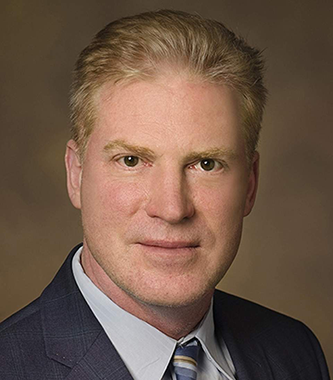
Yves Lussier
Professor and Chair, Department of Biomedical Informatics, University of Utah
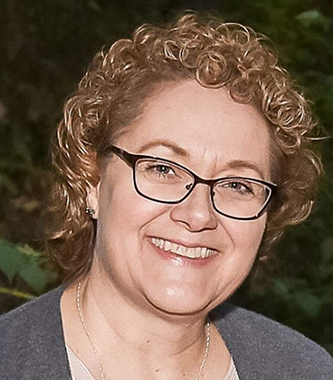
Carolyn Scheese
Associate Professor (Clinical), University of Utah College of Nursing
Event Schedule
The proposed workshop will be 3.5 hours, including a 30-minute coffee break for attendees to network with each other. All the speakers have confirmed participation.
Welcome Remarks and Introduction
Keynote 30 min presentation + 10 min Q&A
Causal AI and the Shift from Prediction to Action
Invited presentations 17 min presentation + 3 min Q&A for each
Target Trial Emulation & Real-World Data
Causal ML & Heterogeneous Treatment Effects
Coffee Break & Student Poster Presentations
Hands-on Tutorial45 min
MedGenAI
Can AI Be Trusted Without Causality?40 min
Moderator: Zhe He, Panelists: Mattia Prosperi, Nansu Zong, Shalmali Joshi
Closing Remarks & Future Directions
Event Organizers
Zhe He
Professor, School of Information at Florida State University
Mattia Prosperi
Professor and Associate Dean, AI and Innovation at the University of Florida

Hilda Klasky
Senior research professional, Oak Ridge National Laboratory

Humayera Islam
Postdoctoral scholar at the University of Chicago

Jakir Hossain Bhuiyan Masud
Postdoctoral Research Fellow, University of Alabama at Birmingham

Navya Martin Kollapally
Assistant Professor of Computer Science, Kean University

Carl Yang
Associate Professor, Department of Computer Science at Emory University
Submissions
Topics of Interest
Submissions should be relevant to the workshop themes, including but not limited to:
- Foundations of causal inference for health data
- Integration of causal modeling with machine learning and deep learning
- Causal discovery from EHR and multimodal data
- Generative AI for healthcare decision making
- Bias, transportability, and fairness in AI systems
- Real-world implementation and regulatory considerations
- Case studies demonstrating causal AI for precision health
Submission Instructions
Please use the AMIA 2026 Submission Template (2-page maximum).
All accepted submissions will be presented as poster presentations. Please indicate "Poster Presentation" at the top of your submission.
Important Dates
- Submission Deadline: September 18, 2026
- Notification of Acceptance: TBD
- Workshop: 8:30 AM - 12 PM, November 7, 2026
To submit your work, please prepare a PDF and use the Submit Now button below to upload it.
Event Venue
Hilton Anatole, Dallas
The Hilton Anatole is one of Dallas's most iconic conference hotels, featuring world-class meeting facilities, distinctive artwork, and an expansive campus in the heart of the city. Conveniently located near downtown Dallas, the hotel offers easy access to dining, entertainment, and transportation.
Event Details
Time/Date: 8:30 AM – 12:00 PM, November 7, 2026
Location: Hilton Anatole, Dallas, TX